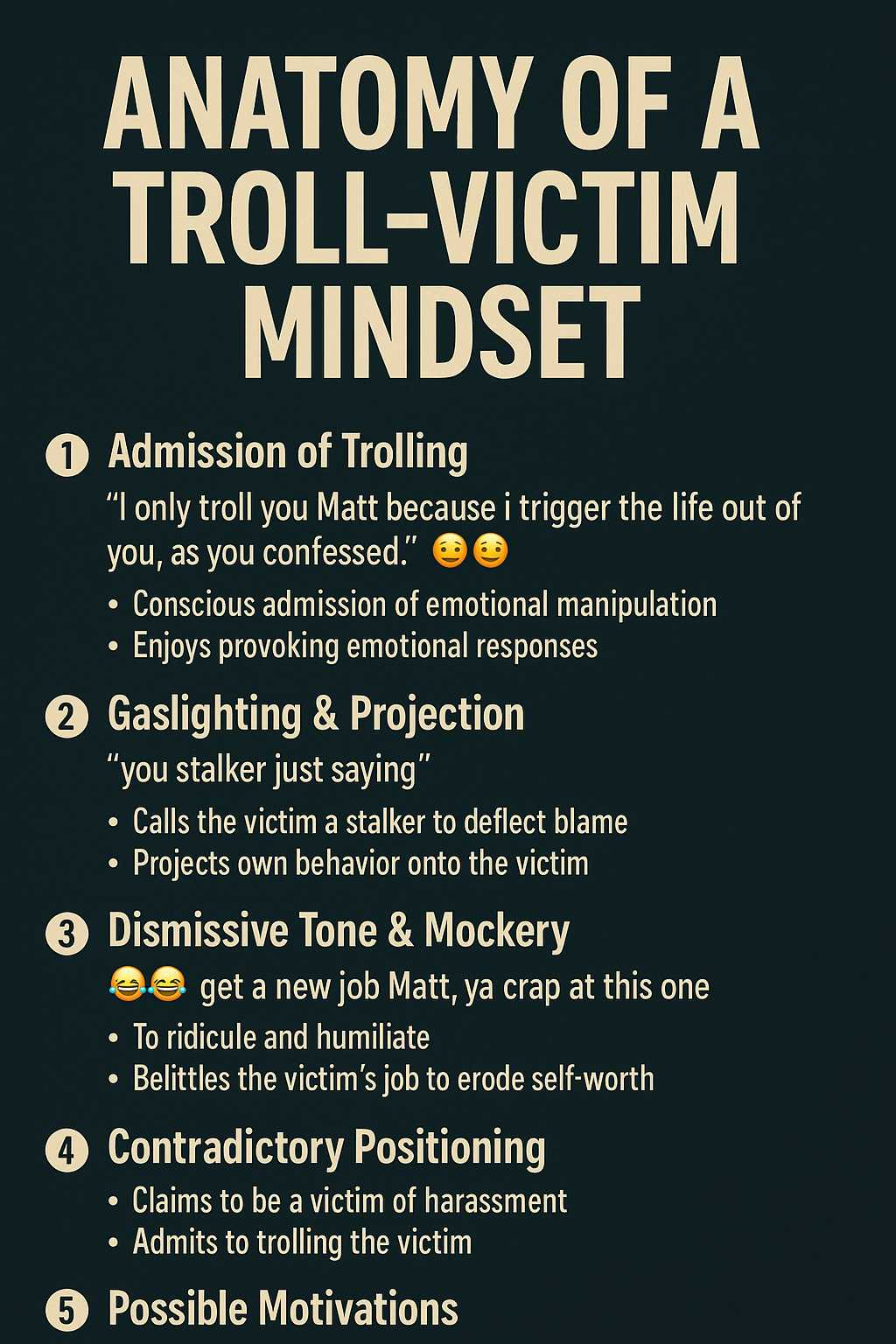
The Evolving Tactics of James Hind: A Pattern of Targeting the Vulnerable.
A recent comment has shed new light on the tactics and motivations of James Hind, a figure whose behaviour over the years has raised significant concern. The commentator remarked, "Across decades, ‘Hind’ has picked on the vulnerable, those he could more easily intimidate. When he was posing as someone overly concerned with the Satanic panic, he achieved very little (his only big achievement of recent years was against Archer and that involved the sub-contracting of the legwork to students) he never went for people who could easily go to the police or who had the resilience of strong, real-world networks. ‘Hind’ bet big on police indifference to issues being raised from vulnerable folk in the ‘crazy corner’. Largely, that bet paid off. But as they say, that was then and this is the now."
This comment offers a concise yet revealing summary of Hind's long-standing strategy of preying on those who are less able to defend themselves, leveraging societal and institutional indifference to his advantage. As the landscape shifts and awareness grows, the tactics that once served Hind well may no longer be as effective. This article explores the implications of this insight, examining how Hind's pattern of behaviour reflects a broader strategy of intimidation and control, and why the tide may finally be turning against him.
A History of Targeting the Vulnerable.
James Hind's modus operandi has consistently involved focusing on individuals or groups who are perceived as vulnerable or isolated. This approach allows him to exert control and intimidation without significant pushback. The comment underscores how Hind has strategically chosen his targets—those who are less likely to have the means, resources, or support systems to effectively challenge or expose his actions.
This pattern is not unique to Hind; it is a common tactic among those who seek to manipulate or control others. By targeting individuals who are already marginalised or who lack robust social networks, Hind can act with a degree of impunity, confident that any complaints or concerns raised by his victims are less likely to be taken seriously by authorities or the broader public.
The Satanic Panic and Beyond.
The commentator notes that Hind's involvement in the "Satanic panic"—a period of widespread fear about supposed satanic ritual abuse—was largely unproductive. This phase of his activity appears to have been an attempt to align himself with a cause that, while sensational, ultimately did not yield the results he may have hoped for. Hind’s failure to achieve significant impact during this time suggests that he struggled to navigate the complexities of a cause that required more than just intimidation—it required credibility and substantive engagement, both of which seem to have been lacking in his efforts.
However, Hind's "big achievement" against an individual referred to as Archer, albeit achieved through outsourcing the "legwork to students," highlights a different aspect of his approach. This instance shows Hind's willingness to delegate tasks that he either could not or did not want to handle personally, indicating a certain pragmatism in his methods. It also suggests that Hind's success, when it occurs, often relies on the work of others rather than his own direct actions.
3. Exploiting Police Indifference
One of the most telling aspects of the commentator’s insight is the observation that Hind has "bet big on police indifference." This strategy has allowed him to operate with relative freedom, secure in the knowledge that his actions are unlikely to provoke a strong response from law enforcement. By focusing on what the commentator refers to as the "crazy corner"—a space occupied by individuals or groups whose concerns are often dismissed or marginalised—Hind has been able to avoid the scrutiny that might otherwise accompany his behaviour.
This exploitation of institutional indifference is a common theme among those who engage in harassment or intimidation. It reflects a deep cynicism about the ability of vulnerable individuals to seek or receive justice, and a calculated decision to operate within a space where the risks of retaliation are perceived to be low.
The Changing Landscape.
Despite the success of these tactics in the past, the commentator suggests that "this was then and this is the now." This statement hints at a growing recognition of Hind's methods and a shift in the broader context in which he operates. As awareness of his behaviour spreads, and as more people begin to connect the dots between his various actions, the environment in which Hind has thrived may be changing.
The rise of social media and the increasing accessibility of information have made it more difficult for individuals like Hind to operate in the shadows. Victims who once felt isolated now have platforms to share their experiences, and communities of support can form more easily than in the past. Additionally, there is a growing recognition within law enforcement and other institutions of the need to take reports of harassment and intimidation more seriously, even when they come from individuals or groups who have traditionally been marginalised or dismissed.
The Role of Public Scrutiny.
Public scrutiny is likely to play a significant role in this changing landscape. As Hind's behaviour becomes more widely known, the pressure on authorities to take action may increase. The commentator's remarks reflect a belief that Hind's time of operating with impunity may be coming to an end, as the tactics that once served him well are increasingly recognized for what they are: calculated attempts to silence and intimidate those who are least able to fight back.
In this context, the role of the public, the media, and advocacy groups becomes crucial. By shining a light on Hind's actions, these entities can help to ensure that his victims are heard and that the authorities are held accountable for their responses. The power of public scrutiny cannot be underestimated, particularly in cases where institutional indifference has allowed harmful behaviour to go unchecked for too long.
The Potential for Accountability.
As the landscape shifts, there is a growing possibility that Hind will face greater accountability for his actions. This could take the form of legal consequences, particularly if evidence of harassment or other criminal behaviour comes to light. Alternatively, Hind may find himself increasingly isolated and discredited, as his tactics are exposed and his credibility is undermined.
For Hind, the stakes are high. His ability to continue operating as he has depends on the continuation of the same conditions that have allowed him to succeed in the past: institutional indifference, a lack of public awareness, and the vulnerability of his targets. As these conditions change, so too does Hind’s ability to operate with impunity.
The Importance of Support Networks.
The comment highlights an important factor that has historically protected Hind: his choice of targets who lack "the resilience of strong, real-world networks." This observation underscores the importance of support networks in both preventing and responding to harassment and intimidation.
For those targeted by individuals like Hind, the presence of a strong support network can make a significant difference. Whether it is friends, family, community groups, or online communities, having people who can provide emotional support, advice, and practical assistance is crucial. These networks not only help victims to cope with the immediate effects of harassment but also provide a platform for collective action, which can be more effective in bringing about change than individual efforts.
In Conclusion: A Call for Vigilance and Action.
The insights provided by the commentator paint a picture of James Hind as a figure who has carefully crafted a strategy of targeting the vulnerable, relying on the indifference of institutions and the isolation of his victims to continue his activities. However, as awareness grows and the landscape changes, the conditions that have allowed Hind to operate may no longer be as favourable.
This moment presents an opportunity for those who have been affected by Hind's actions to come together, share their experiences, and push for greater accountability. It also serves as a reminder of the importance of vigilance in recognizing and responding to patterns of harassment and intimidation, particularly when they are directed at those who are less able to defend themselves.
The "now" that the commentator refers to is a time of potential change, where the tactics that once worked for Hind may no longer be effective. As the tide turns, it is crucial that those who are in a position to act—whether they are members of the public, the media, or law enforcement—do so with a clear understanding of the patterns and tactics at play. Only through concerted effort can the cycle of harassment and intimidation be broken, and justice be served.