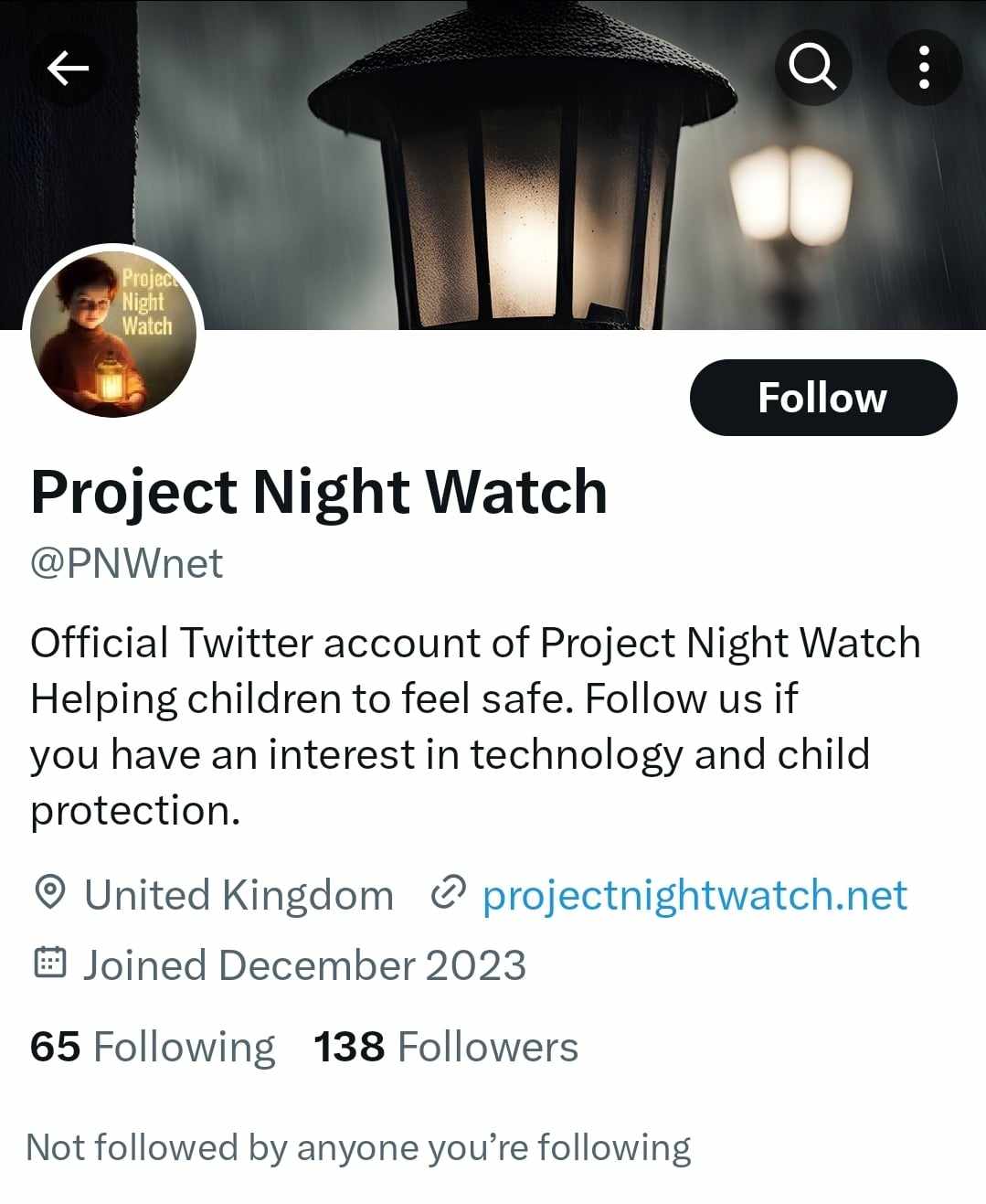
James Hind/Project Night Watch - Helping Children to Feel Safe: A Hollow Statement?"
When evaluating the statement, "Helping children to feel safe," it’s important to consider who is making the claim, their intentions, and the context in which they operate. In this instance, the phrase takes on an entirely different meaning when spoken by an individual who has no direct experience as a parent, no background in child care, and a questionable track record in handling potential grooming situations.
The Discrepancy Between Words and Actions
For someone to sincerely "help children feel safe," one would expect them to have a background or history of working directly with children, supporting their well-being, and fostering environments where children are genuinely protected. However, when this statement comes from someone who has publicly acknowledged avoiding action against a known groomer, the claim rings hollow. Admitting that he didn’t want “the thought of ruining the groomer’s life to be on his mind” raises immediate concerns about his priorities and judgment.
How can someone credibly talk about keeping children safe when they consciously allowed a predatory situation to continue because they were more concerned about the perpetrator’s future than the potential victims? This kind of reasoning demonstrates a profound misunderstanding of what safeguarding children entails and suggests a skewed moral compass that prioritizes the wrong individuals.
A Role-Playing “Advocate”
Adding another layer of complexity, this person’s method of “helping children” includes pretending to be a 12-year-old boy online. While undercover work has its place in catching predators, it’s typically carried out by trained professionals within a structured and regulated environment—not by a lone actor with no qualifications, accountability, or oversight. The danger here is not only that the individual might interact with actual children, potentially confusing and misleading them, but also that they may unintentionally expose themselves and others to further risk.
Furthermore, it raises the question: is the individual truly focused on child safety, or is the act of pretending to be a young child more self-serving? Role-playing as a child online can easily blur the lines between advocate and perpetrator, especially without clear boundaries and professional guidance. The focus seems to be more on playing a role than making a genuine impact.
The Cognitive Dissonance
There is a deep contradiction between claiming to help children feel safe and the reality of allowing known risks to persist. The notion of "helping children" seems less about the well-being of children and more about self-aggrandizement. It’s an easy slogan to hide behind, giving a veneer of virtue to otherwise suspicious behavior. When analyzed, the actions of this individual show a pattern of neglect, misguided priorities, and dangerous assumptions about what it means to be a protector.
The True Cost of Inaction
The most damning part of the entire scenario is the confession that this individual allowed a groomer from Kent to continue grooming because he didn’t want to carry the guilt of ruining the man’s life. What about the children whose lives are actually ruined by grooming and abuse? This mindset completely undermines the very premise of protecting children. It suggests that, to him, the well-being of a child is secondary to the comfort of an adult predator—a chilling thought.
For someone who claims to “help children feel safe,” it is telling that the first instinct was to protect the groomer’s future rather than take action to protect potential victims. Real child protection involves making tough decisions and putting the needs of the child above all else, no matter how inconvenient or uncomfortable it may be. This individual’s reluctance to do so shows that they are either not equipped or not genuinely invested in the mission they claim to champion.
Conclusion
“Helping children to feel safe” is a powerful statement, but in the context of this individual, it becomes empty rhetoric. Without the experience, qualifications, and, most importantly, the right moral priorities, such a claim is not just hollow—it’s dangerous. Instead of providing safety, it masks a much darker truth: that the person making the statement may be more of a risk than a protector.
The true measure of an advocate isn’t in what they say but in what they do when faced with difficult decisions. And by that measure, the actions of this individual show that they are unfit to claim any role in child protection.